
Endocrinology Care Near You
Care for Hormones, Metabolism, and the Conditions That Shape How You Feel Every Day
Feeling off and not sure why? Symptoms like ongoing fatigue, unexplained weight changes, thyroid concerns, or blood sugar that will not stabilize often point back to something happening inside the endocrine system. At Upperline Health, our endocrinology team helps you find the reason, build a plan that fits your life, and stay supported over the long run. Connect with a specialist close to home in Florida, Indiana, Kentucky, or Michigan.

What Is Endocrinology Care?
Endocrinology is the branch of medicine focused on hormones and the glands that produce them. Your endocrine system quietly runs many of the things you feel every day, including energy, sleep, mood, metabolism, blood sugar, and reproductive health. When one part of that system falls out of balance, symptoms can show up in ways that feel confusing and hard to explain.
An endocrinologist is a board certified physician who diagnoses and treats hormonal and metabolic conditions. That includes diabetes, thyroid disorders, PCOS, hormonal imbalances, osteoporosis, and adrenal or pituitary conditions. At Upperline Health, endocrinology care is built to help you connect the dots, order the right tests, and manage complex conditions over time, working closely with your primary care doctor and any other specialists on your care team.
When to See an Endocrinologist
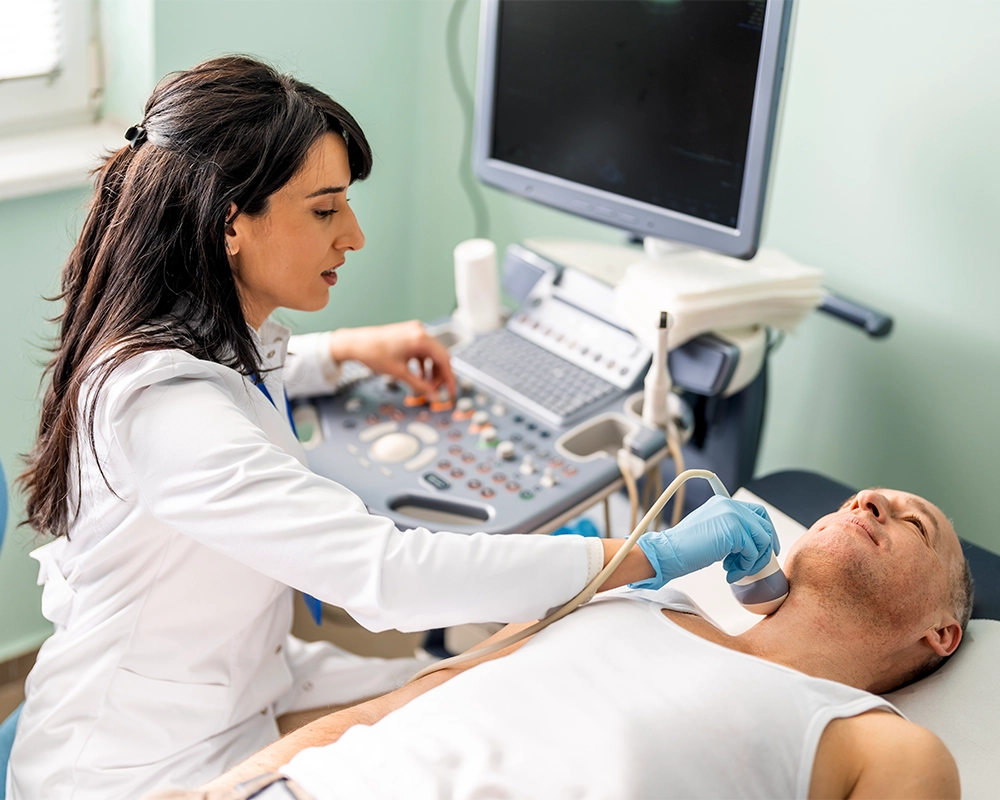
Hormone related conditions often show up as symptoms that do not quite add up. If any of the following sound familiar, it may be time to talk with a specialist:
• Fatigue or low energy that has stuck around for weeks
• Weight gain or weight loss you cannot explain
• Changes in mood, sleep, or how you feel throughout the day
• Irregular periods, fertility concerns, or perimenopause symptoms
• Hair thinning, excess hair growth, or noticeable skin changes
• Thyroid concerns, a lump or swelling in the neck, or shifts in metabolism
• A blood sugar reading, A1C, or TSH result outside the normal range
• Ongoing management of diabetes, osteoporosis, or PCOS
• A referral from your primary care doctor for hormone testing
You do not need to have every answer before your first visit. Bringing a list of symptoms, current medications, and any recent lab results is enough for your provider to start putting the picture together.
What Our Endocrinology Team Treats
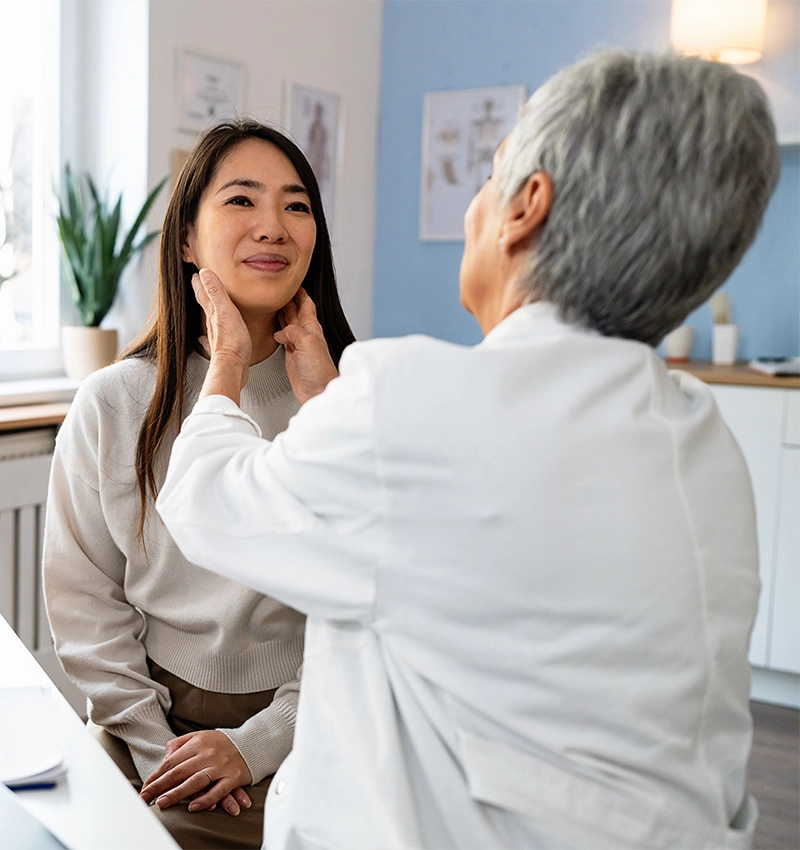
Our specialists care for a full range of hormone and metabolism related conditions. Explore the areas below to learn how care works, what to expect, and how our team supports you between visits.
Diabetes Care & Management
From a new diabetes diagnosis to complex, long standing cases, we offer diabetes management at Upperline Health with clear guidance, personalized medication plans, and coordinated care across specialties. We manage Type 1, Type 2, and gestational diabetes with GLP-1 medications like Ozempic and Mounjaro, insulin therapy, continuous glucose monitoring, and A1C driven treatment adjustments. When diabetes affects your feet, wound healing, or circulation, our endocrinologists coordinate directly with the Upperline podiatry team, integration most practices can’t offer.
Thyroid Disorders
We evaluate and treat the full spectrum of thyroid disorders, including hypothyroidism, hyperthyroidism, Hashimoto disease, Graves disease, and thyroid nodules. If you have already been prescribed levothyroxine and your symptoms are not improving, or if a TSH result came back outside the normal range, our team can review your labs, order additional testing, and adjust your care plan. Most thyroid conditions are very manageable with the right specialist involved.
PCOS & Hormonal Imbalances
Polycystic ovary syndrome, hormonal imbalances, perimenopause, and menopause related concerns all share a common thread: they affect how you feel across many parts of daily life. Our endocrinologists diagnose and treat PCOS and hormonal imbalances by addressing the hormone and insulin resistance patterns underneath, and we support women through perimenopause and menopause with hormone replacement therapy when it is the right fit. For many patients, this is the first time someone connects the pieces they have been carrying for years.
Integrated Diabetic Foot Care
This is where Upperline Health does something no single specialty group can. Diabetes and foot health are deeply connected, and small changes in circulation, sensation, or wound healing can become serious quickly. Our endocrinologists work side by side with the Upperline podiatry team, sharing records, coordinating treatment, and catching problems like foot ulcers before they turn into hospital visits. If you live with diabetes and have concerns about your feet, this is the care model built exactly for you.
Additional Treated Condition
Our team also cares for osteoporosis and other metabolic bone diseases, adrenal disorders such as Cushing syndrome and Addison disease, low testosterone (hypogonadism), high cholesterol and lipid disorders tied to metabolic conditions, and medically supervised weight management for patients dealing with obesity.
Meet Our Endocrinology Team
Our endocrinologists are board certified physicians who have chosen to build long relationships with the patients they treat, not just review a chart and move on. Every provider on our team practices with the same commitment to whole person care, coordinated across specialties, and grounded in the day to day questions that actually affect how you feel.
| Provider | Title | Clinic locations | Profile |
| Sohail Ali, MD | Endocrinologist | Altamonte Springs, FL | View Profile |
| Matthew Crabtree, DO | Endocrinologist | Bowling Green, KY | View Profile |
| George Grunberger, MD | Endocrinologist | Bloomfield Hills, MI | View Profile |
| Amer Kassar, MD | Endocrinologist | Valparaiso, Hobart, Munster IN | View Profile |
| Mahek Kermalli, MMS, PA-C | Physician Assistant | Altamonte Springs, FL | View Profile |
| Anjana Myneni, MD, FACE | Endocrinologist | Bloomfield Hills, MI | View Profile |
| Amy Tobin, DO, FACE | Endocrinologist | Bloomfield Hills, MI | View Profile |
Endocrinology Clinics Near You
Our endocrinology teams see patients across Florida, Indiana, Kentucky, and Michigan. Choose your area to view clinics, book a visit, and meet the providers who care for your community.
Locations closest to
Endocrinology Care in Florida
Looking for an endocrinologist in Orlando, Altamonte Springs, Kissimmee, Palm Coast, Lake Mary, or Winter Park? Our Florida endocrinology team helps patients across Central Florida manage diabetes, thyroid disorders, PCOS, and hormonal imbalances close to home. Same day and next day appointments are available at select locations.
Endocrinology Care in Indiana
Our Indiana endocrinology team supports patients across Northwest Indiana with three convenient locations: Valparaiso, Hobart, and Munster. All three share the same experienced care team, so you can pick the location closest to you. Patients from nearby Illinois communities like Orland Park and Tinley Park are welcome and just a short drive away.
Endocrinology Care in Kentucky
In Kentucky, our endocrinology team serves patients across Bowling Green and the wider South Central Kentucky region. Middle Tennessee patients traveling from Nashville, Franklin, Clarksville, Hendersonville, or Gallatin are also welcome at our Bowling Green location, a comfortable drive from most of the greater Nashville area.
Endocrinology Care in Michigan
Our Michigan endocrinology team cares for patients across Metro Detroit and the surrounding suburbs from our Bloomfield Hills clinic. Whether you are managing long standing diabetes, a recent thyroid diagnosis, or unexplained fatigue you have been dismissing for months, we help you find answers and build a plan that fits your life.
What to Expect at Your Visit
Your first visit is a conversation. Your provider will ask about your symptoms, medical history, current medications, and any recent lab work or imaging. Bringing a list of medications and any prior results helps the visit feel productive from the start.
A thorough evaluation
You will leave the visit knowing what your provider is looking at, what the next steps are, and why. Questions are welcomed, and there is no rush.
Clear explanation of your condition
You will leave the visit knowing what your provider is looking at, what the next steps are, and why. Questions are welcomed, and there is no rush.
A personalized treatment plan
Care is built around you, your goals, and how your condition actually shows up in your daily life. That may include medication adjustments, monitoring, coordination with other specialists, or lifestyle guidance.
Next steps and follow up
Through Upperline Plus, your care team stays connected between appointments, coordinates with your other doctors, and is available when questions come up. You do not have to wait for the next visit to get help.

Experience Whole-Person Care with Upperline Plus
Upperline Plus is establishing a new standard in whole-patient care, built to anticipate what you need, not just react to it. It is not a separate program or a change to your insurance. It is an extra layer of support that works alongside your existing providers to help you stay on track.
Your health changes over time, and your care should too. Your care team tracks how things are trending, builds a plan you can understand and feel ownership over, and stays with you for the long run, not just the next visit.
Your health is shaped by more than your clinical needs. An interdisciplinary team goes deeper on nutrition, medications, mobility, mental health, and the goals that matter to you, giving you the time and attention your health deserves.
Care stays with you across providers, locations, labs, and life events. Your team simplifies your care by directly coordinating with your other doctors, so nothing falls through the cracks.
Questions do not always come up during visits. Reach a team who knows your full picture, with telehealth, urgent care, and in-home services when getting to the clinic is not easy.
Frequently Asked Questions
An endocrinologist is a board certified physician who diagnoses and treats conditions related to hormones and the endocrine system. That includes diabetes, thyroid disorders, PCOS, osteoporosis, adrenal and pituitary disorders, low testosterone, and other metabolic conditions.
An endocrinologist diagnoses hormonal and metabolic imbalances, orders and interprets specialized lab work, and builds long term treatment plans for conditions like diabetes, thyroid disease, and PCOS. Care usually involves ongoing monitoring, medication adjustments, and coordination with your primary care doctor.
Common conditions include Type 1 and Type 2 diabetes, prediabetes, hypothyroidism, hyperthyroidism, Hashimoto disease, Graves disease, thyroid nodules, PCOS, hormonal imbalances, osteoporosis, adrenal disorders, low testosterone, and obesity.
It may be time to see an endocrinologist when hormone related symptoms persist, when your A1C stays above target on current medication, when a thyroid nodule or abnormal TSH is found, when unexplained weight changes and fatigue do not resolve, or when your primary care doctor refers you for specialty evaluation.
The medical specialist who diagnoses and treats hormone related conditions is called an endocrinologist. Some endocrinologists specialize further in diabetes, thyroid, reproductive endocrinology, or bone metabolism.
Yes. Diabetes is one of the most common conditions endocrinologists treat. Endocrinologists prescribe GLP 1 medications like Ozempic and Mounjaro, adjust insulin regimens, interpret A1C trends, and coordinate diabetic foot care with podiatry when complications arise. Learn more about Diabetes Management at Upperline Health.
Yes. Endocrinologists diagnose and treat PCOS by addressing the hormone imbalances and insulin resistance underneath the condition. Care often includes lab testing, medication, lifestyle guidance, and coordination with gynecology when reproductive concerns are part of the picture. Learn more about PCOS and Hormonal Imbalances care.
Yes. Endocrinologists diagnose and manage the full range of thyroid conditions, including hypothyroidism, hyperthyroidism, Hashimoto disease, Graves disease, and thyroid nodules. Most thyroid conditions are very manageable with the right specialist involved. Learn more about Thyroid Disorders care.
Ready to Feel Like Yourself Again?
Whether you are starting with unexplained symptoms, managing a long standing condition, or looking for a second opinion on your current care plan, our endocrinology team is ready to help. Same day and next day visits are available at select locations.